Key Takeaways
- 64% of family caregivers report moderate to high emotional stress, and 1 in 4 feel alone — up from 21% in 2020.
- Choice matters most: caregivers with no say in taking on their role report nearly double the poor mental health days and are nearly three times more likely to feel isolated than those who chose their path.
- Despite the strain, 51% of caregivers find purpose and meaning in their role — resilience that should be supported, not relied on as a substitute for real help.
A joint post from the National Alliance for Caregiving and the National Alliance on Mental Illness
Behind nearly every person managing a serious health condition is someone helping them navigate it — coordinating appointments, managing medications, responding to crises, and advocating for their dignity. These 63 million family caregivers are an important part of America’s mental health system, but data suggest they are under serious mental and emotional strain.
A new joint brief from the National Alliance for Caregiving (NAC) and the National Alliance on Mental Illness (NAMI), drawing on data from Caregiving in the US 2025, makes the case plainly: caregiver mental health is not a side issue. It’s a measure of how well the whole system is working
The toll is real — and it’s measurable.
Nearly two-thirds of caregivers (64%) report moderate to high emotional stress. One in four feels alone — up from 21% in 2020. On average, caregivers experience 7 poor mental health days each month, and 4 days when their own health keeps them from doing the things they need to do.
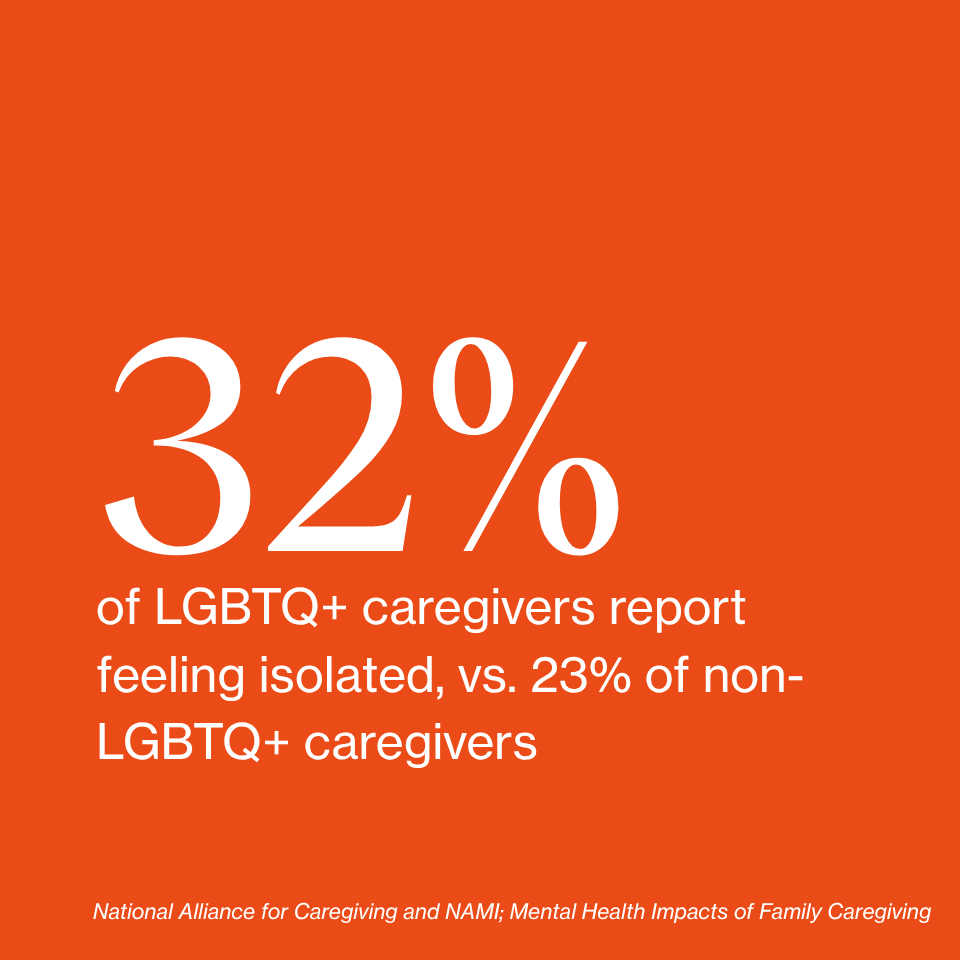
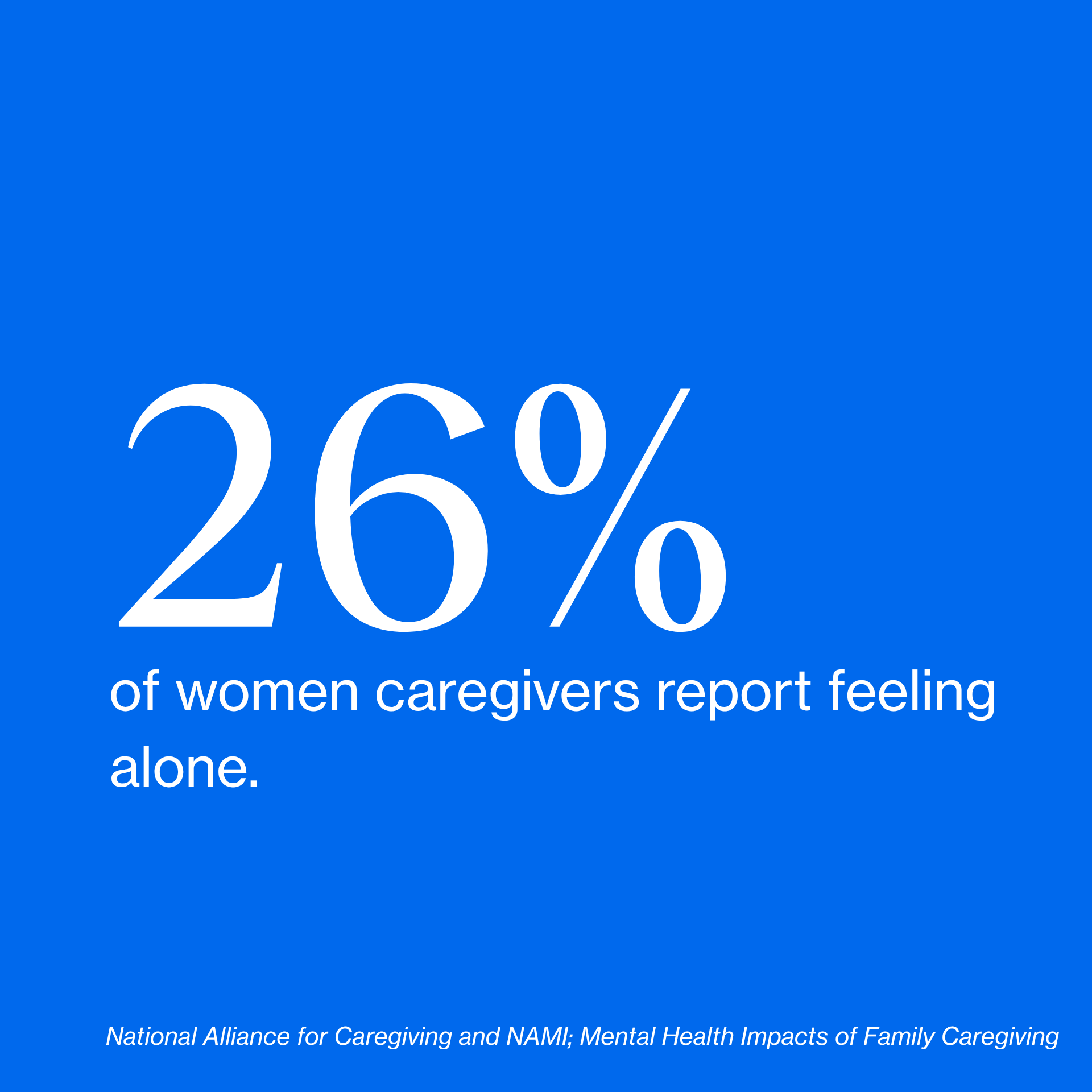
Yang, a mother caring remotely for her son after a transplant, described what those numbers feel like from the inside: “I almost had a mental breakdown — all the worry and helplessness. The mental and physical are so connected… I wish there was someone I could go to and say, ‘this is my situation, can I please get help?’” Her story is not unusual. The strain also falls unevenly — LGBTQ+ caregivers (32%) and women (26%) report feeling alone at higher rates than their peers — and more than 1 in 4 care recipients live with their own emotional or mental health needs, compounding the psychological weight on the family member supporting them.
I almost had a mental breakdown — all the worry and helplessness. The mental and physical are so connected… I wish there was someone I could go to and say, ‘this is my situation, can I please get help?’
Choice changes everything.
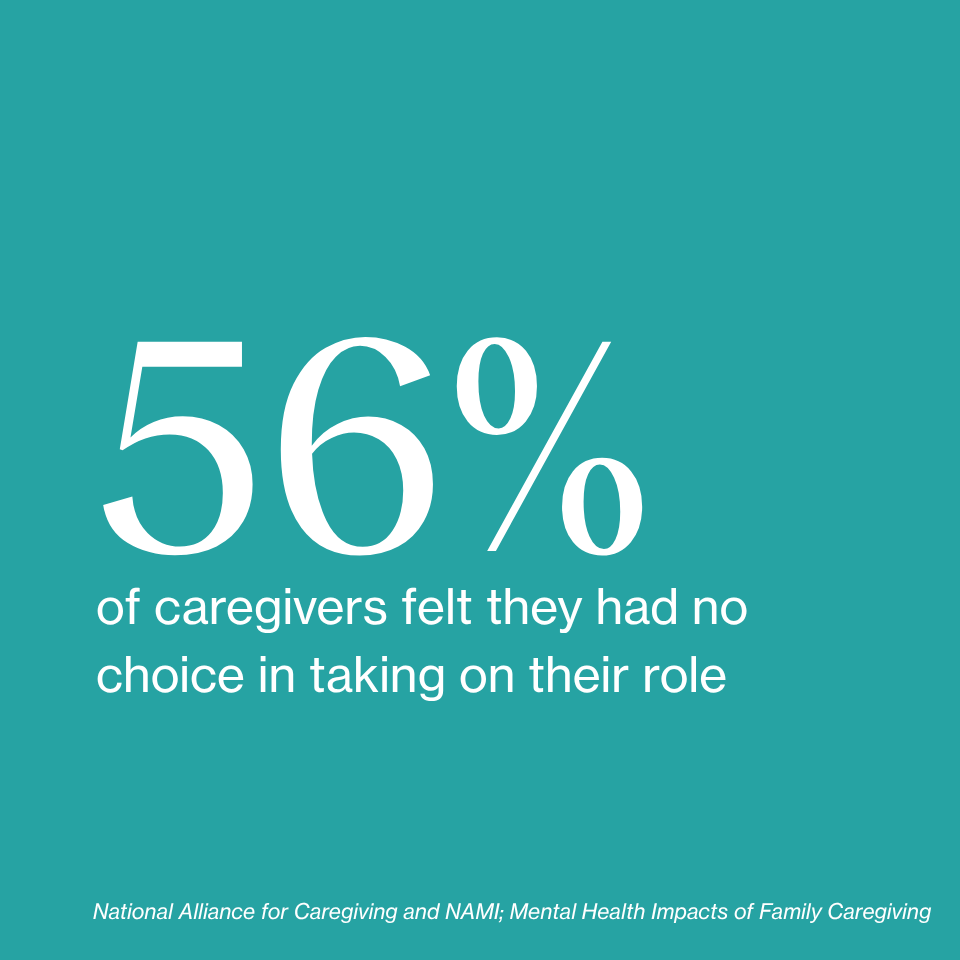
The most striking finding may be this: 56% of caregivers said they had no real choice in taking on their role. Those caregivers report nearly double the poor mental health days (8.0 vs. 4.5) and are nearly three times more likely to feel isolated (34% vs. 12%) than those who chose their path. When caregiving is unchosen, unsupported, and unrecognized, the cost shows up in mental health outcomes — and eventually in emergency rooms, missed work, and lost income. Recognizing caregivers as part of the care team, not silent backstops to it, is where prevention begins.
Resilience is part of the story, too.
The data isn’t only about strain. More than half of caregivers (51%) say their role gives them a sense of purpose and meaning — a number that rises among Hispanic/Latino caregivers (58%) and those caring for nonrelatives (63%). Even in difficult circumstances, caregivers describe pride, closeness, and growth. That resilience is real, and it deserves to be protected, not used as a substitute for adequate support.
What would actually help?
The brief points to clear opportunities:
- Expand respite and choice. Nearly 40% of caregivers say respite services would help. Programs that restore even modest autonomy reduce mental health burden.
- Strengthen connection. Caregivers may benefit from connecting with other caregivers. Support groups provide a structured place for this to happen. For those navigating a loved one’s mental health challenges, NAMI offers programs and support groups for family members in hundreds of communities; over 90% of participants say the groups help them and give them hope.
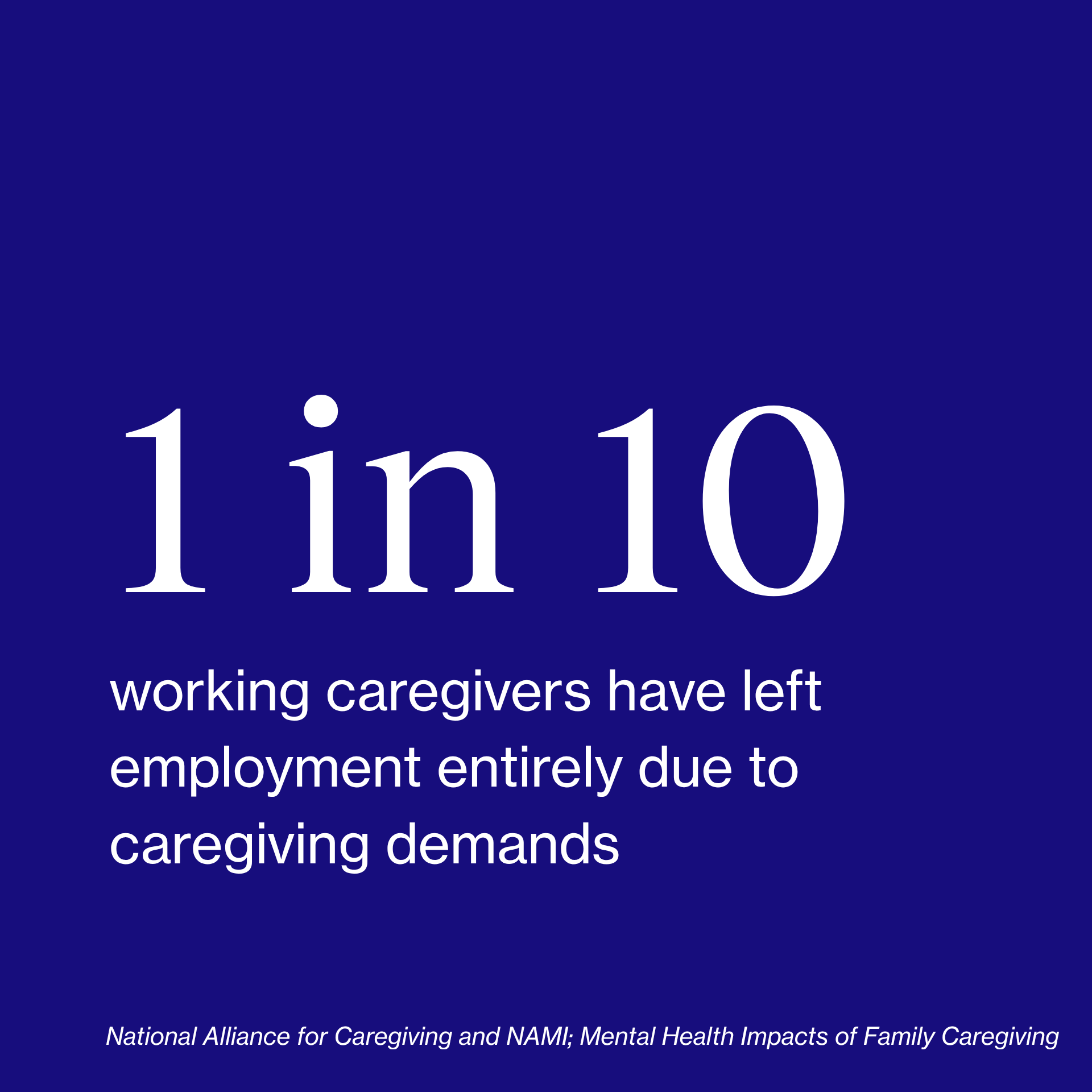
- Meet caregivers at work. A recent NAMI poll reveals that caregivers experience significantly higher rates of burnout than non-caregivers (61% vs. 49%) because of demands at work. With 70% of working-age caregivers employed and 56% needing to take time off due to caregiving, flexible arrangements and caregiver-aware employee assistance programs are no longer optional.
- Build with technology. Caregivers are increasingly using digital technologies, with remote monitoring nearly doubling since 2020. Digital platforms can also help deliver mental health support to caregivers. Teletherapy and mobile apps may help caregivers who are unable to access traditional services.
- Fix the systems behind the strain. Simplified disability determination, clearer HIPAA guidance for care partners, and true mental health parity would reduce hours of unpaid administrative labor caregivers absorb every week.

Caregiving for my partner with Parkinson’s has negatively affected my mental health. I feel helpless, alone, frustrated; and sometimes, I feel trapped. My stress level is much higher as I am the only income earner. I fear the cost of medical care in the future especially if I lose my job.
A shared commitment.
As one family caregiver put it: “Caregiving for my partner with Parkinson’s has negatively affected my mental health. I feel helpless, alone, frustrated; and sometimes, I feel trapped. My stress level is much higher as I am the only income earner. I fear the cost of medical care in the future especially if I lose my job.”
This is the reality behind the data: the mental health toll, the financial strain, the fear of what comes next. NAC and NAMI are calling for policies, workplaces, and healthcare systems to prioritize the mental health of family caregivers. Failing to do so will only deepen the strain on the millions of people who hold our care system together, weakening the vital care they make possible.